Understanding its role in flexible deburring, weld grinding, edge finishing, and polishing
What Is a Force Control Grinding Head?
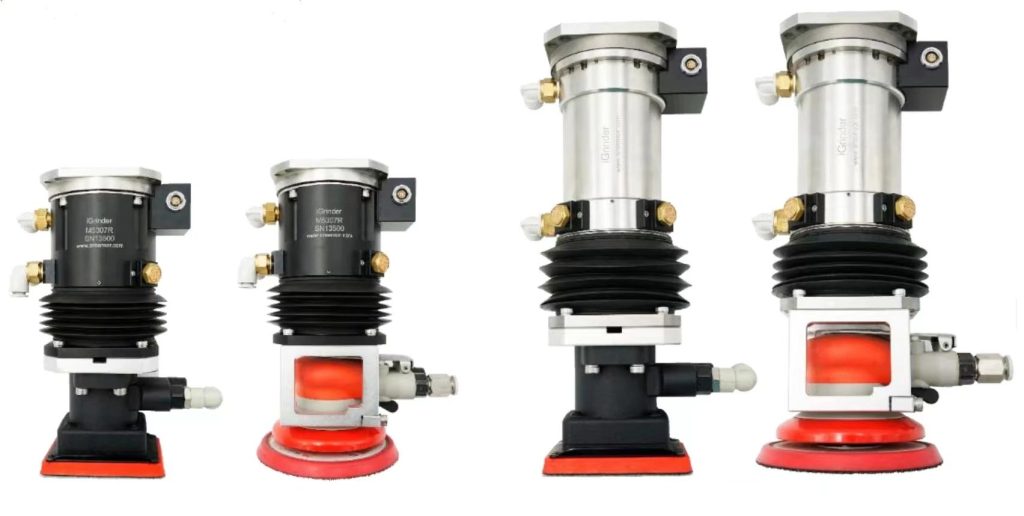
A force control grinding head is a flexible processing tool installed at the end of a robot. It is commonly used for deburring, weld grinding, edge finishing, and polishing.During robotic grinding, workpieces may have variations in height, curvature, or fixturing position. If the robot relies only on a fixed path, excessive pressure may cause over-grinding, while insufficient pressure may leave burrs or produce an uneven surface. A force control grinding head adjusts to the contact condition between the tool and the workpiece, helping the abrasive tool follow the surface more effectively.
How Does It Work?
The robot moves along the programmed path. After the grinding head contacts the workpiece, its force control mechanism responds to local surface changes and helps reduce sudden pressure changes and rigid collisions. The robot controls the overall motion path, while the grinding head manages the local contact condition. Together, they form a flexible robotic processing method. Force control principles, adjustment directions, and compatible tools vary between products. Actual functions should be confirmed through product documentation and process testing.
Main Application Value
Adapt to complex surfaces: Better handle curved parts, welded components, and castings. Improve process consistency: Reduce variation caused by workpiece dimensions and fixturing errors. Reduce over-grinding risks: Buffer contact force and help limit edge damage or excessive material removal. Support automated production: Suitable for robotic deburring, weld grinding, edge finishing, and polishing.
What Should Be Considered When Selecting One?
• The processing method and workpiece material.
• Robot mounting dimensions, payload, and interfaces.
• Compatibility with grinding spindles, pneumatic tools, and abrasives.
• Force control direction, adjustment range, and control method.
• Workpiece fixturing accuracy, surface variation, and material allowance.
• Dust protection, extraction, vibration, and consumable maintenance requirements.
Conclusion
A force control grinding head is an important end-of-arm component in a flexible robotic grinding system. By regulating the contact condition between the tool and the workpiece, it helps the robot accommodate surface variation and provides more stable conditions for deburring, weld grinding, edge finishing, and polishing.It does not replace the robot, abrasive tool, fixture, or process validation. Before implementation, users should evaluate the workpiece material, dimensions, processing objective, robot model, and abrasive tool, followed by sample testing.
Consultation focus: force control grinding head selection, robot end-of-arm integration, and automated grinding process testing
行业背景与项目启示
“How Does a Force Control Grinding Head Improve Robotic Grinding Consistency?”需要结合真实制造目标理解。读者应关注该动态希望解决的产能、质量、用工或交付问题,并判断方案是否适配工件、工艺流程和现场条件。
进一步沟通应重点覆盖目标工艺、负载与臂展需求、工装、安全方案、集成接口以及自动化可量化结果,并通过图纸、样件、节拍数据或现场评审验证关键假设。
项目评估可从工件尺寸与种类、年产量、目标节拍、质量标准、能源介质和场地限制开始,再明确安全边界、上下游接口、换型方式和维护空间。
实施前还应约定可量化的验收标准,例如重复精度、工艺一致性、单位时间产量、换型时间、报警恢复和人员负担,并保留培训、参数备份和维护资料。