A Complete Guide to Automatic Robot Tool Switching
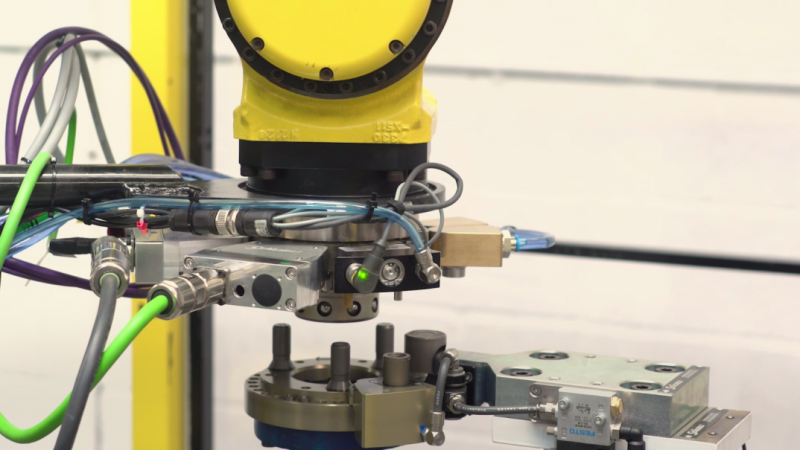
An automatic tool change system consists of an industrial robot, tool changer, tool stands, controller andperipheral systems. The robot moves to a tool stand, safely releases the current tool, then docks and locksonto the target tool. It connects air, power or signal interfaces and verifies secure locking. Afterconfirmation, the robot runs programs for picking, welding, grinding and assembly. Anti-drop protection andsignal interlocks are required for high-risk applications.
What Are the Main Types of Robotic Tool Changers?
Pneumatic Robotic Tool Changers
Air-driven, compact and fast for welding, handling and assembly. Check air pressure, locking force andpressure-loss safety during selection.
Electric Robotic Tool Changers
Motor-actuated with real-time status feedback, suitable for special installation and monitoring needs.
Multi-media Robotic Tool Changers
Integrated air, power and communication ports. When switching welding torches, they transfer mechanical lock, signals and process media to reduce cable reconnection.
Manual Robotic Tool Changers
Simple mechanical locks operated by staff, for low-frequency tool change scenarios.
Key Technical Parameters of Robotic Tool Changers
Select based on load, torque, positioning accuracy, IP rating and interfaces, not just robot rated load. Key specs include rated load, allowable torque, repeat positioning accuracy, tool change time and statusfeedback signals. All performance data shall refer to the manufacturer’s official datasheet.
Industrial Automation Applications of Robotic Tool Changers
Robotic Welding Workstations
Auto-switch torches and fixtures to cut manual replacement time and raise flexibility for mixed production.
Pay attention to torch weight, gravity offset and splash protection.
Robotic Grinding & Polishing
Swap grinding/polishing heads automatically to minimize downtime. Watch load and torque limits for force-controlled grinding.
Robotic Handling & Loading/Unloading
Switch grippers and vacuum cups. One robot handles multiple tasks to improve equipment utilization.
Robotic Assembly & Inspection
Work with screwdrivers, probes and vision units. Multi-media changers build modular automation systems.
Benefits:
Reduce manual tool installation work
Shorten production line changeover time
Improve robot and equipment utilization
Support high-mix low-volume production
Simplify production line adjustment and upgrading
行业背景与项目启示
“How Does a Robotic Tool Changer Work?”需要结合真实制造目标理解。读者应关注该动态希望解决的产能、质量、用工或交付问题,并判断方案是否适配工件、工艺流程和现场条件。
进一步沟通应重点覆盖the intended process, payload and reach needs, tooling, safety concept, integration interfaces and the measurable result expected from automation,并通过图纸、样件、节拍数据或现场评审验证关键假设。
项目评估可从工件尺寸与种类、年产量、目标节拍、质量标准、能源介质和场地限制开始,再明确安全边界、上下游接口、换型方式和维护空间。
实施前还应约定可量化的验收标准,例如重复精度、工艺一致性、单位时间产量、换型时间、报警恢复和人员负担,并保留培训、参数备份和维护资料。