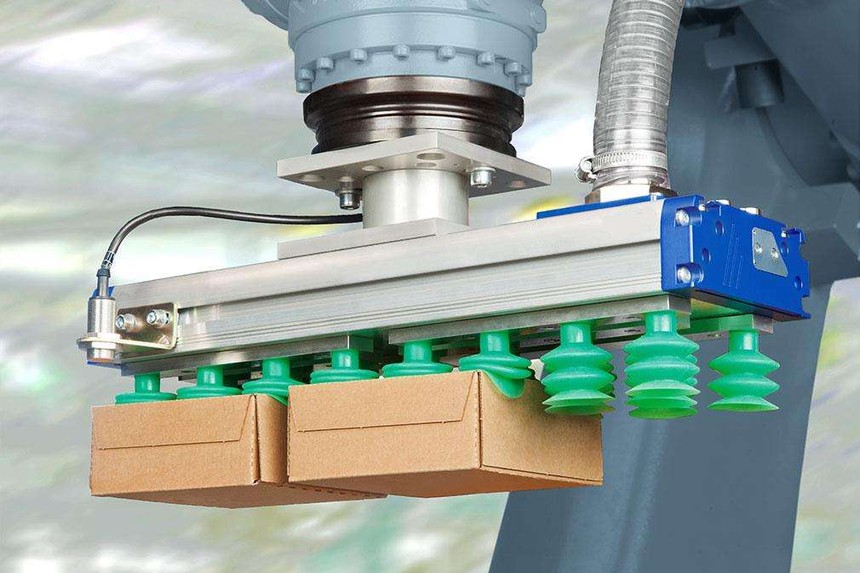
In automated material handling, robotic loading and unloading, and sheet transfer, a vacuum suction cup relies on the pressure difference between the cup and the atmosphere outside. Stable handling depends on both pressure difference and effective contact area.
| Key message | Reliable gripping depends on vacuum pressure, effective contact area, surface condition, acceleration and air leakage. |
| Basic formula | F = 0.1 × A × P F is theoretical lifting force A is effective suction area P is vacuum pressure |
Horizontal handling and vertical lifting require different safety considerations. Vertical applications must also account for friction, surface condition and acceleration. Heavier workpieces, rougher surfaces and higher leakage require more suction area, more cups or greater flow capacity.
Three Sizing Priorities
1. Safety factor: Rough, porous, oily or shear-loaded workpieces require additional reserve.
2. Vacuum and flow: Higher vacuum is not automatically better. Flow capacity must compensate for leakage and maintain holding force.
3. Dynamic motion: High-speed pick-and-place operations must be checked at the point of maximum holding demand, not only under static load.
From Calculation to Validation
A dedicated vacuum-release path can help the workpiece detach quickly. Final sizing should be validated with the actual workpiece to confirm that suction area, vacuum pressure, flow capacity and safety factor are properly matched for safe and consistent automated handling.
Technical note :The formula and parameters are engineering references. Actual applications should be confirmed through testing under the specific workpiece, surface, direction, acceleration and leakage conditions.
行业背景与项目启示
“Reliable Vacuum Handling Starts With More Than Vacuum Level”需要结合真实制造目标理解。读者应关注该动态希望解决的产能、质量、用工或交付问题,并判断方案是否适配工件、工艺流程和现场条件。
进一步沟通应重点覆盖the manufacturing context, practical application, implementation risk and evidence that helps buyers compare automation options,并通过图纸、样件、节拍数据或现场评审验证关键假设。
项目评估可从工件尺寸与种类、年产量、目标节拍、质量标准、能源介质和场地限制开始,再明确安全边界、上下游接口、换型方式和维护空间。
实施前还应约定可量化的验收标准,例如重复精度、工艺一致性、单位时间产量、换型时间、报警恢复和人员负担,并保留培训、参数备份和维护资料。