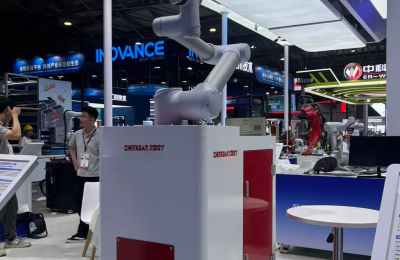
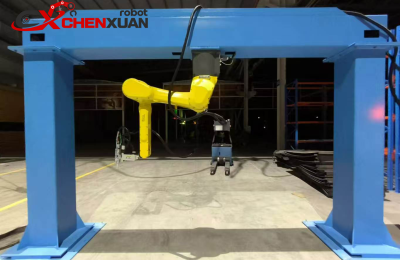
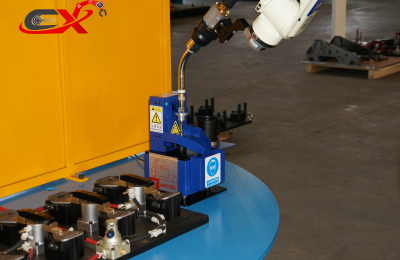
Laser vision is helping welding robots respond to real workpiece conditions instead of following a fixed path alone.
Why Laser Tracking Matters
In automated welding production, assembly tolerances, thermal deformation, and weld position deviations may cause the torch to move away from the intended path. This can affect welding quality. To address these challenges, laser tracking systems are becoming an important functional module in robotic welding workstations.
How The System Works
A laser tracking system typically consists of a laser sensor, industrial camera, controller, and data processing software. During operation, the laser sensor projects light onto the weld area while the industrial camera captures the weld profile. The system then identifies the weld center, width, and offset direction through image recognition and data calculation, and sends correction commands to the robot control system in real time.
Real Time Path Compensation
Compared with a welding method that relies only on taught robot paths, laser tracking can adjust to the actual weld position. When a workpiece has positioning errors, an irregular seam, or thermal deformation during welding, the robot can correct its torch path and welding posture in time, helping the torch follow the target seam more closely.
Typical Applications And Considerations
Laser tracking systems can be used for fillet welds, butt welds, lap welds, and other welding applications. They are suitable for steel structures, construction machinery, automotive components, and other metal parts. Some systems can also scan the weld before welding to automatically generate or correct the robot path. Tracking performance may be affected by reflective surfaces, spatter, smoke, and unclear weld profiles, so the sensor position, welding parameters, and protection measures should be considered together.
Conclusion
A laser tracking system is more than a supplementary inspection device. It is a key link between visual sensing and robotic execution. By identifying the weld position and applying path compensation in real time, it improves the adaptability and consistency of the welding process, supporting intelligent welding for large workpieces and complex metal structures
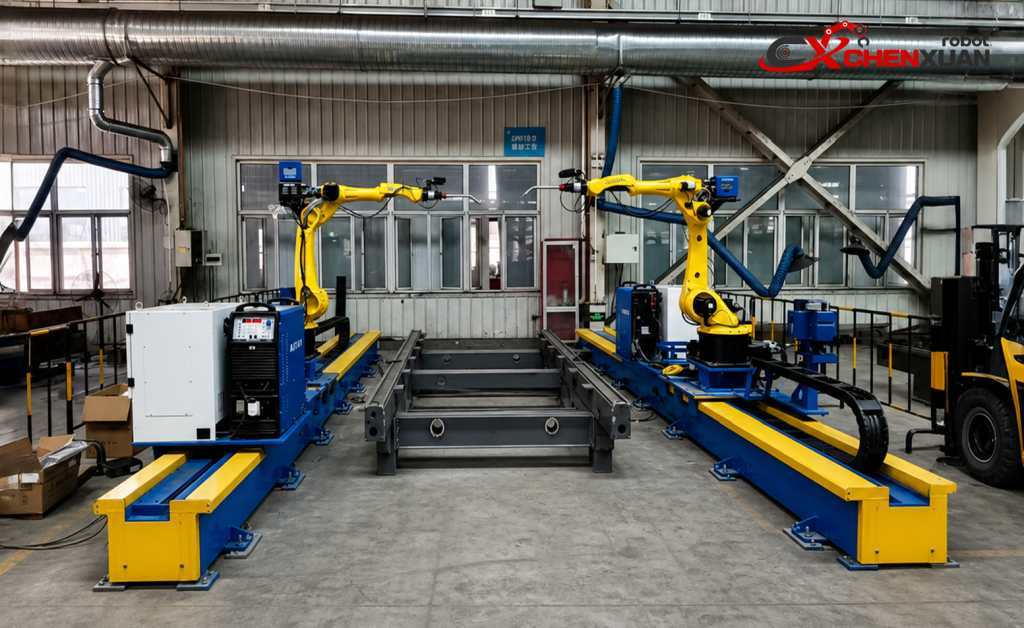
行业背景与项目启示
“Laser Vision Enables Precise Welding: How Laser Tracking Systems Improve Robotic Welding Intelligence”需要结合真实制造目标理解。读者应关注该动态希望解决的产能、质量、用工或交付问题,并判断方案是否适配工件、工艺流程和现场条件。
进一步沟通应重点覆盖目标工艺、负载与臂展需求、工装、安全方案、集成接口以及自动化可量化结果,并通过图纸、样件、节拍数据或现场评审验证关键假设。
项目评估可从工件尺寸与种类、年产量、目标节拍、质量标准、能源介质和场地限制开始,再明确安全边界、上下游接口、换型方式和维护空间。
实施前还应约定可量化的验收标准,例如重复精度、工艺一致性、单位时间产量、换型时间、报警恢复和人员负担,并保留培训、参数备份和维护资料。